November 12, 2026 | Erin Bluvas, bluvase@sc.edu
Research led by Edward Frongillo, a professor in the Department of Health Promotion, Education, and Behavior and co-director for the Arnold School Global Health Initiative, has assessed the effectiveness of a large-scale nutrition and health program in Nepal called Suaahara. Published in Maternal & Child Nutrition, the study found that the districts where the program was implemented experienced several key nutrition improvements compared to areas where the program was not offered.
“Despite an overall reduction in maternal and child undernutrition in Nepal in the last 30 years, this public health challenge remains prevalent in Nepal and elsewhere in South Asia, with consequences for the health of mothers and the physical and psychomotor development of children,” Frongillo says. “Researchers, clinicians, frontline workers and other stakeholders have been working to reduce undernutrition further by concentrating on pregnant women and young children and by addressing challenges such as food intake, disease prevention, food insecurity, healthcare access, and healthy environments.”
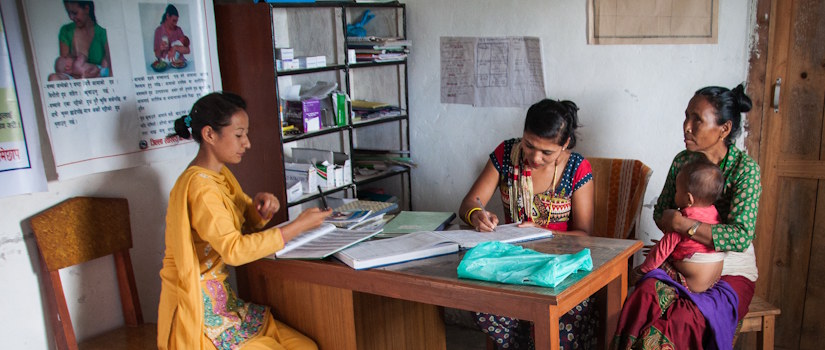
A complex and innovative program that coordinated contributions from multiple sectors (e.g., education, agriculture and water, sanitation and hygiene), Suaahara aimed to increase exposure to nutrition-related information and services while improving nutrition knowledge and practices among pregnant women and mothers of young children. With 41% of Nepalese children under age 5 considered stunted and 11% classified as wasted, the program was launched in two phases from 2011 to 2023 in 42 of Nepal’s 77 districts, funded by the United States Agency for International Development. By the end of the first phase in 2016, Suaahara reached about 2.4 million people across 1,900 village development committees, about a tenth of Nepal’s total population. Suaahara trained 33,688 volunteers and 32,784 additional frontline workers across maternal, infant, and young child nutrition, family planning, and water, sanitation, and hygiene.

When comparing the nutrition and health outcomes of women and children who participated in Suaahara with those who did not, the researchers found that mothers in the program were less likely to be underweight. They also found that infants younger than six months in the program were longer – likely a result of better maternal nutrition that allowed for healthier growth during pregnancy and during early infancy.
Beyond these early stages of development, the positive impacts continued, with young children (ages 6 to 24 months) consuming a greater variety of foods and more likely to meet recommended dietary diversity standards. Similarly, the authors saw general feeding practices improve – observing that children in the program were more likely to eat enough during the day, be fed more when sick, and receive an overall healthier diet. As a complement to these enhanced dietary practices, the participants also experienced better treatment and recovery from childhood diarrhea; caregivers knew to provide children with oral rehydration solution and zinc, which helped prevent serious illness.
These outcomes were especially encouraging given the external challenges that occurred over the course of the program. Natural disasters such as earthquakes (particularly in 2015), recurring droughts, floods and landslides, political restructuring, and the COVID-19 pandemic all created unique challenges to program implementation and measurement. The revolving window of participants during cycles of pregnancy and early childhood also posed outreach and engagement challenges in staying connected with an evolving target population.
“Many small pilot programs show initial promise, but scientists and frontline workers struggle to replicate these outcomes when they expand the program to a larger group,” Frongillo says. “Suaahara yielded strong results for a large-scale, real-world program operating across diverse districts for a long period of time. Our findings demonstrated not only meaningful improvements in maternal and child nutrition and health but also in the successful implementation of a broad public health program.”